
MOVEMENT
The concept of movement has been addressed in archaeology since the 1930s within the contexts of diffusionism (Childe 1951), migration, exchange (Mauss 1990), settlement patterns, communication, formation and interaction (Schiffer 1987; Trigger 1989; Renfrew & Bahn 2016). However, these approaches have predominantly evaluated movement as large-scale, linear, and singular events, often framing it within static models and systems. Today, it is increasingly recognized that movement cannot be understood as a unidirectional phenomenon or within closed systems (Dawdy 2013; Hodder 2012).
A significant portion of archaeological research has analyzed movement by limiting it to spatial displacement, often treating it as events specific to certain periods or as one-time occurrences (Cribb 1991; Yakar 1990; Azkia 2002). However, movement encompasses not only physical movements but also the circulation of time, space, objects, rituals, ideas, and identities (Ingold 2007; Aldred 2021). Movement must be examined not only within social and economic contexts but also through its symbolic and emotional dimensions (Hahn & Weiss 2013). In contemporary archaeology, actor-network theory (ANT), materiality studies, new materialism, and phenomenological approaches enable movement to be understood as a dynamic, multi-layered, and relational process (Latour 2005; Fowler 2013). Entities in motion are not limited to humans; objects, buildings, animals, the environment, and even settlements are also part of or catalysts for movement. The circulation of cultural and material entities is not merely an exchange of materials but also a process through which identities, memories, and meanings are reproduced (Joyce & Gillespie 2015; Knappett 2011).
In this context, rather than confining movement to narrow frameworks such as migration, it is necessary to conceptualize it as a continuously transforming, reconfiguring phenomenon with its own internal dynamics. This is particularly relevant when considering the dimension of time. Movement can be compulsory/voluntary, continuous/intermittent, individual/collective, ritualistic, or economic (Cresswell 2006). For contemporary archaeology, the central question is no longer who is moving but rather in what contexts, with what meanings, and how movement occurs (Van Dommelen 2014). Advanced technologies, particularly Geographic Information Systems (GIS), contribute significantly to making the physical dimensions of movement patterns more visible.
The Purpose of the Meeting
In this meeting, we aim to approach movement not as a fixed or confined phenomenon but as a multi-dimensional network of interactions, adopting a non-human-centric perspective. At the same time, we invite a rethinking of movement beyond the confines of trade or exchange.
-
How can movement be defined within geographic, cultural, technological, symbolic, ecological, and intellectual frameworks?
-
How does movement carry different meanings for individuals and communities, and what are its traces in archaeological contexts?
-
Are only humans and objects in motion? How do abilities, thoughts, knowledge, symbolic elements, belonging, and beliefs circulate among contexts within local and regional cultural geographies?
-
Formation/deformation and construction/deconstruction are tied to motion and can be slow or fast by nature. How can these phenomena be defined within the concept of movement?
-
How can the movement of objects, spaces, and people be analyzed and interpreted more holistically using archaeological data?
-
How can more flexible and multi-layered theoretical frameworks be developed to move beyond traditional paradigms of movement?
This meeting aims to open a comprehensive and critical space for inquiry into the concept of movement, moving beyond one-dimensional frameworks.
How Can We Rethink Movement?
Movement is not merely an analysis of the past but also a phenomenon with continuity in the contemporary world. Indeed, movement, as it has throughout history, continues today. Many disciplines that investigate the past by working backward from the present also approach this movement as an inverted methodological process.
We invite you to this multi-layered discussion to push boundaries and explore movement within new theoretical frameworks.
Adnan Baysal & Güneş Duru
WHAT IS TAG?
Since its establishment in 1977, the Theoretical Archaeology Group (TAG) has played a significant role in reshaping archaeological thought. Initially founded in the United Kingdom as a response to the growing need for theoretical debates in archaeology, TAG has evolved over time into an internationally influential network, fostering discussion and innovation across the discipline.
TAG was established at the University of Southampton by a group of archaeologists who sought to challenge the dominance of Processual Archaeology, which had significantly shaped the field since the 1960s. Processual Archaeology undoubtedly represented a revolutionary step for its time, transforming archaeology into a scientific discipline. While theory became one of the active drivers of archaeology, data collection based on positivist and scientific methods, along with empirical analysis, became indispensable components of archaeological research. However, some researchers believed that the Processualists had succumbed to the dominance of positivist thinking, neglecting critical aspects of human experience such as ideology, symbolism, and social structures. Seeking a more comprehensive approach, TAG emerged as a forum where archaeologists could discuss alternative theoretical frameworks, drawing inspiration from fields such as anthropology, sociology, philosophy, and postmodern thought. The group’s second conference in 1979 laid the foundation for decades of lively debates, introducing new perspectives and challenging existing paradigms.
Over the years, TAG has provided a platform for various theoretical movements that have shaped contemporary archaeology. During the 1980s and 1990s, it played a significant role in the rise of Post-Processual Archaeology, pioneered by figures like Ian Hodder. Post-Processual Archaeology criticized the rigid scientific approach of Processual Archaeology, emphasizing subjectivity, interpretation, and the role of individual agency in past societies.
As archaeological thought continued to evolve, TAG conferences became a platform for discussing topics such as feminist archaeology, phenomenology, structuralism, and even digital and cyber-archaeology in the 21st century. The group encouraged interdisciplinary approaches, integrating insights from psychology, cultural studies, and environmental sciences to better understand past human behavior.
One of TAG’s most distinctive features is its annual conferences, which have become a significant academic event for archaeologists worldwide. Unlike traditional academic conferences, TAG encourages open debates, experimental sessions, and creative presentations. From performance archaeology to discussions on ethics and heritage management, TAG conferences have continually expanded how archaeology is practiced and understood.
Initially active only in the United Kingdom, TAG gradually expanded globally, leading to the establishment of local TAG groups in countries such as North America, Norway, and Turkey. Each of these groups has adapted the TAG model to address local archaeological issues while remaining committed to the principle of theoretical engagement.
More than 40 years after its founding, TAG continues to be a vital force in the field of archaeological theory. While traditional archaeological methodologies remain important, TAG has ensured that theoretical debates remain at the heart of the discipline. The group has not only encouraged researchers to question existing assumptions but has also fostered critical thinking about the past among new generations of archaeologists.
As archaeology faces new challenges, such as excavation ethics, the decolonisation of the discipline, and the integration of artificial intelligence into research, TAG's role in promoting theoretical innovation has become more crucial than ever. With its open and inclusive approach, TAG will continue to contribute to shaping archaeology in the years to come.
For those who wish to engage with the most current theoretical debates in archaeology, TAG remains an indispensable platform that continually expands the ways we examine the past. We hope to sustain this continuity in Turkey as well, as over the past 12 years, we have only been able to organize three TAG meetings.

Colin Renfrew, TAG Southampton

Morning session of the first TAG meeting

TAG Türkiye 1st meeting, Ege University, 2013
The Past TAG Meetings in Turkiye

TAG I - Changing Archaeology
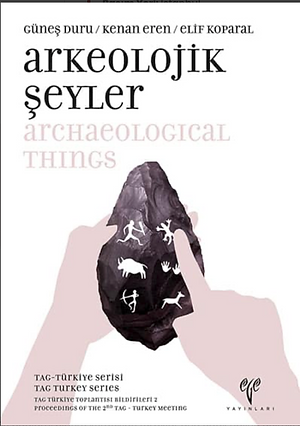
TAG II - Archaeological Things
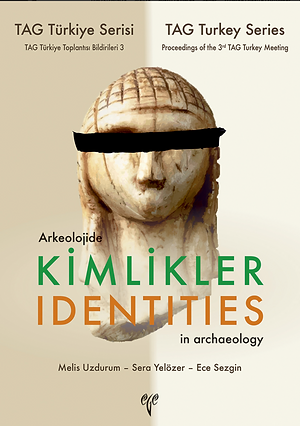
TAG III - Identities in Archaeology
The first meeting of the Theoretical Archaeology Group (TAG) in Turkey was held on May 9-10, 2013, at Ege University (İzmir), organized by Çiler Çilingiroğlu and Fahri Dikkaya. The event aimed to create a discussion environment questioning the relationship of Turkish archaeology with politics, ideology, and history. It featured 69 speakers, and the proceedings of the 1st Theoretical Archaeology Group Turkey Meeting were later published in a book titled "Değişen Arkeoloji" (Changing Archaeology).
The second meeting took place on February 5-6, 2015, at Mimar Sinan Fine Arts University (İstanbul), organized by Güneş Duru, Kenan Eren, and Elif Koparal. The theme of this meeting was "archaeological things," focusing on the role of "things" in our lives, the chain of contexts they create, the entangled relationships between individuals, societies, and objects, and their significance across different periods, times, and concepts. The 2nd Theoretical Archaeology Group Turkey Meeting began with an opening speech by Ian Hodder and included a total of eight sessions with 32 presentations. The proceedings were published in a book titled "Arkeolojik Şeyler" (Archaeological Things).
The 3rd Theoretical Archaeology Group Turkey Meeting was organized by Melis Uzdurum, Sera Yelözer, Ece Sezgin, and Dilara Nil Çolak to discuss the state of identity studies in archaeology, explore how identities can be defined in archaeological data on a conceptual and methodological level, and analyze archaeological practice from the perspective of "identities." The event featured 52 speakers across 10 sessions. Due to the Covid-19 pandemic, the four-day symposium was held online via Zoom, and the proceedings were published under the title "Arkeolojide Kimlikler" (Identities in Archaeology).
Important Dates
Last Abstract Submission Date
September 1, 2025
Meeting Venue and Date
ANKARA UNIVERSITY, DTCF
December 2025
Deadline for Submission of Articles for Publication
February 28, 2026
